You walk into your bedroom after a long day hoping to unwind, and something about the room keeps you switched on. Most people blame the mattress or the noise. More often it is the lighting.
One ceiling fixture is not a lighting plan
A single bright fixture in the middle of the ceiling gives you one setting: on. It flattens the room, throws hard shadows into the corners and gives your eyes no signal that the day is ending. A bedroom needs at least three layers, and they need to be switchable independently.
Ambient, task and accent
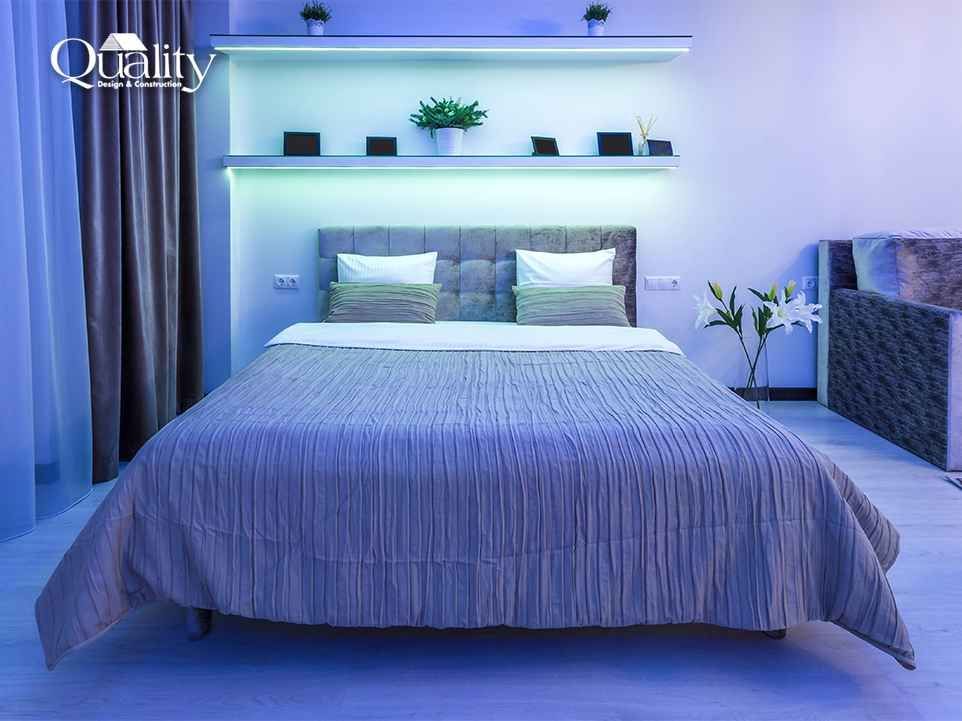
Ambient light fills the room and sets the baseline. Task light is what you read by, and it belongs beside the bed rather than above it, where a lamp or a wall-mounted reader puts light on the page without lighting your partner. Accent light is the layer most bedrooms skip entirely, and it is the one that does the emotional work: a lamp on a dresser, light washing a wall, something low and warm in a corner.
Warm light late, cooler light early
Color temperature matters more in a bedroom than anywhere else in the house. Cooler light keeps you alert, which is useful at seven in the morning and counterproductive at eleven at night. Warmer tones in the evening tell your body what time it is. Dimmers are the cheapest upgrade available on this list, and the one clients thank us for most.
Think about it before the walls close up
Lighting is easy while a room is open and expensive afterwards. If you are remodeling a bedroom, the time to decide where the bedside circuits, the dimmers and the switched outlets go is during design, not once the drywall is up.